
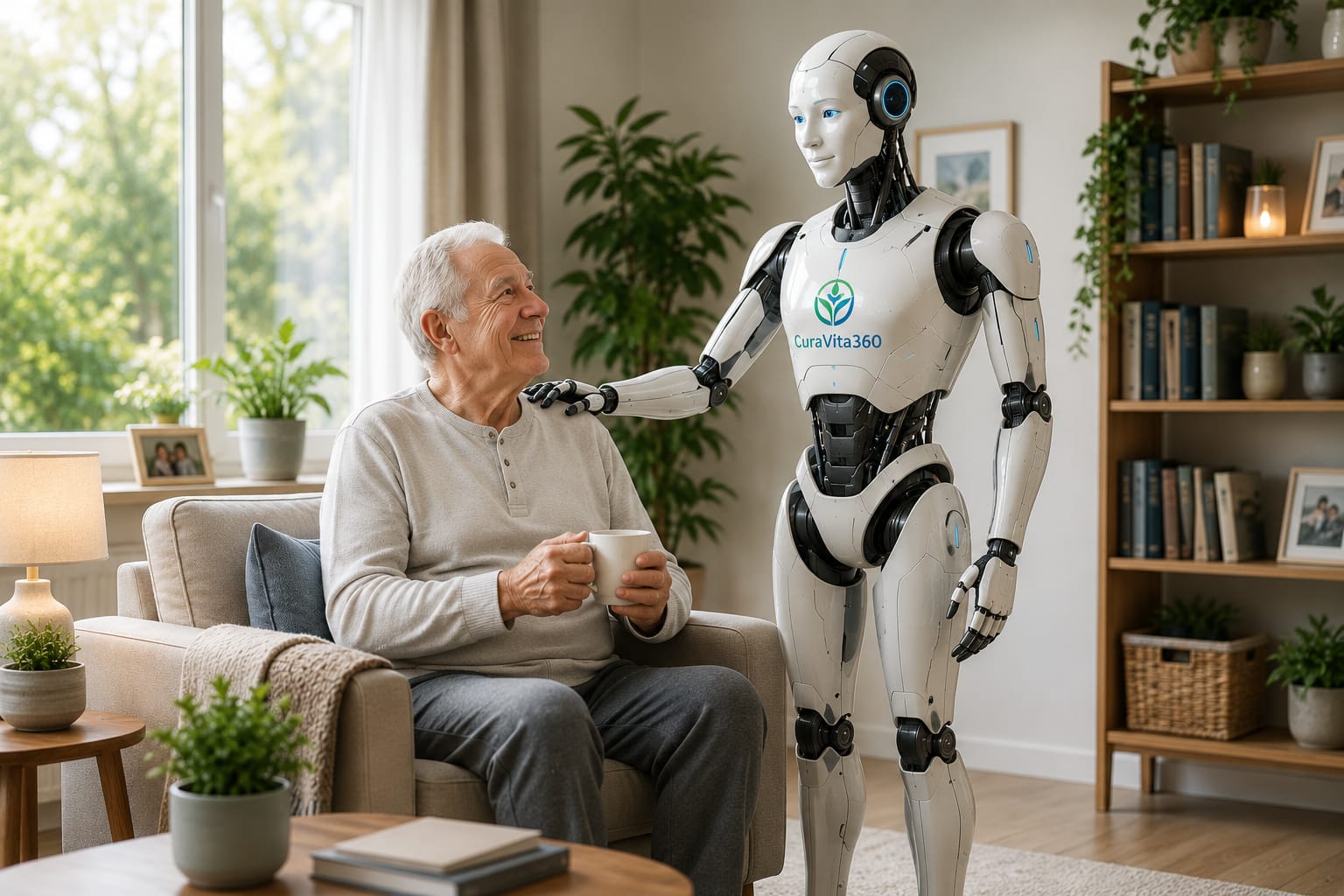
Loneliness is sometimes called a “geriatric giant” for good reason. Research summarized by the National Academies of Sciences, Engineering, and Medicine has found that nearly a quarter of adults aged 65 and older are socially isolated — a state linked to higher risks of dementia, heart disease, and stroke. As care-worker shortages grow worldwide, companion robots are being studied as one scalable way to help.
What the evidence suggests
A growing body of studies and meta-analyses points to companion robots as a promising, scalable approach for reducing loneliness, particularly in institutional care settings. Reviews note that social robots can increase feelings of connectedness, and some pilots with older adults living with depression or dementia have shown encouraging results. The earliest and most studied example, the therapeutic seal robot PARO, is now used in more than 30 countries.
Why presence helps
The mechanism isn’t magic. A companion that proactively initiates conversation, remembers prior interactions, and encourages daily activity gives a person something many isolated adults lack: regular, low-pressure social contact and a sense of routine. For some, that’s enough to meaningfully lift mood and re-engagement.
The honest limitations
Researchers are equally clear about the caveats. Companion robots are not a replacement for human relationships, and ethicists have raised fair questions about emotional attachment and “deception” — whether it’s appropriate for a person to feel cared for by a machine. The consensus emerging in the literature is that robots work best as a complement to human care, not a substitute for it.
What to look for in a companion
If you’re considering a companion robot for yourself or a loved one, the research points toward a few sensible priorities:
• Proactive, natural conversation rather than command-and-response only.
• Memory of past interactions so the relationship feels continuous.
• Encouragement of real-world activity and human connection, not isolation.
• Clear, privacy-conscious data practices.
• Realistic expectations — a complement to family, friends, and professional care.
The bottom line
The science is still maturing, but the direction is hopeful: for many older adults, a well-designed companion robot can reduce loneliness and support wellbeing. The key is treating it as one tool in a broader circle of care.
Share:
How AI Humanoid Robots Are Reshaping Wellness in 2026
Robotic Rehabilitation: How Robot Therapy Aids Recovery