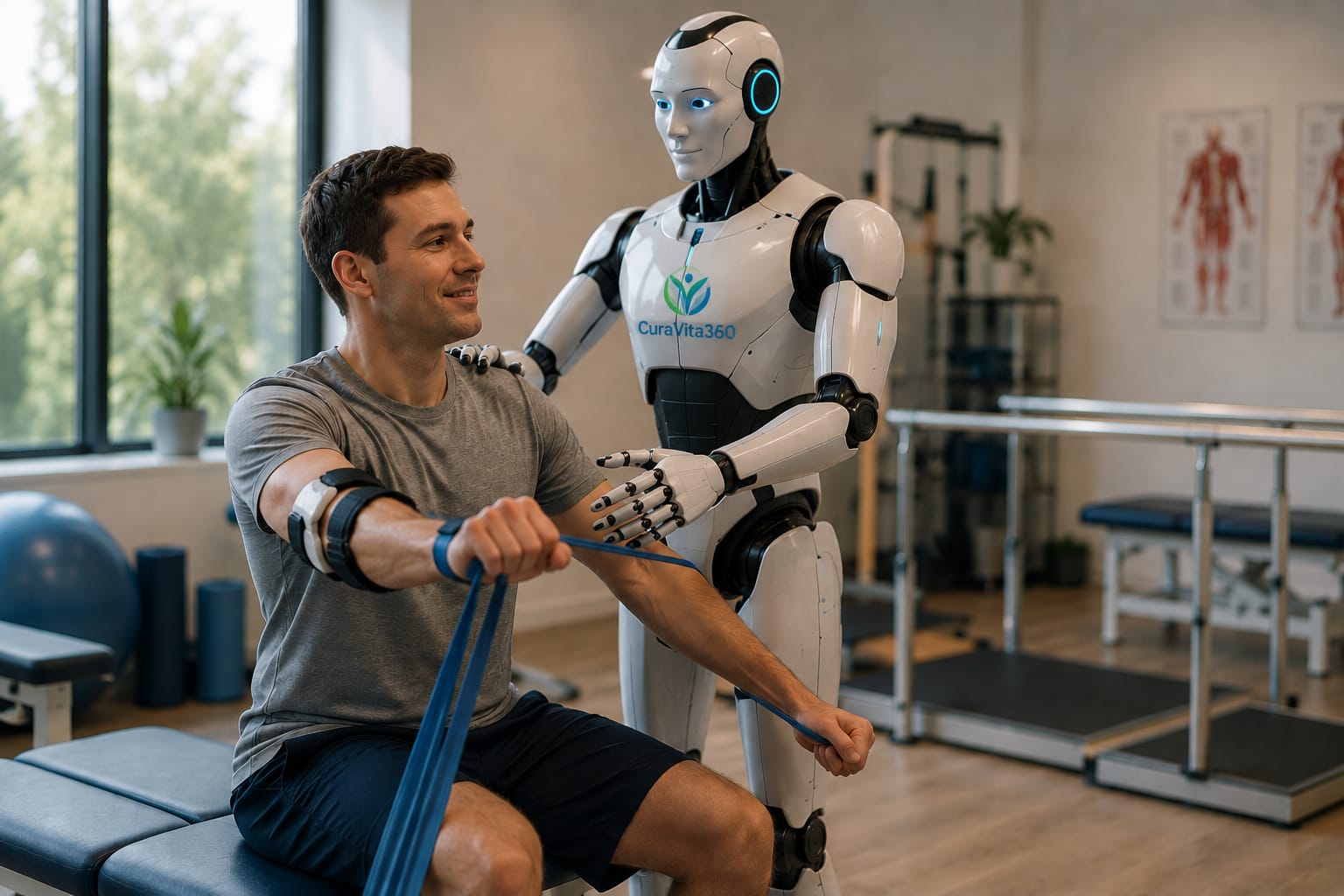
Some of the most established uses of robotics in healthcare aren’t in the home — they’re in rehabilitation clinics. Robot-assisted therapy and powered exoskeletons help people recovering from stroke and injury practice movement with high intensity and repetition, which is exactly what the recovering brain and body need.
How robotic therapy works
Rehabilitation robots come in a few forms: end-effector devices that guide a hand or arm through motions, fixed exoskeletons that support training in place, and wearable exoskeletons that strap around the limbs to assist overground walking. They share a common goal — delivering more repetitions of goal-oriented movement than a therapist could safely provide by hand, while reducing the physical burden on clinicians.
What the research shows
Evidence has been building for years. Umbrella reviews combining hundreds of randomized controlled trials have found that robot-assisted therapy can improve upper-limb outcomes after stroke, especially when added on top of conventional therapy and when combined with engaging, game-like training. Results aren’t uniform — some treadmill-based studies showed mixed effects — but the overall picture supports robotics as a valuable complement to skilled human therapy.
Why intensity and engagement matter
Recovery after a neurological injury depends heavily on neuroplasticity, which is driven by repeated, challenging, task-specific practice. Robots excel at delivering that volume consistently, and pairing them with virtual reality or gamified exercises keeps patients engaged through the hundreds of repetitions recovery can require.
The role of AI
Newer systems add AI that adjusts assistance “as needed” — providing just enough help for the patient to complete a movement while still working hard. This adaptive approach aims to maximize effort and progress rather than letting the machine do all the work.
Where this is heading
Rehabilitation robotics is one of the clearest examples of robots and clinicians working together. The technology doesn’t replace the therapist’s judgment; it extends their reach, letting patients train more and clinicians focus on the parts of care that genuinely require a human touch.
This article is general information, not medical advice. Rehabilitation should always be guided by qualified healthcare professionals. CuraVita360 Robotics products are wellness companions, not rehabilitation or medical devices.
Share:
Companion Robots & Loneliness: What the Research Shows (2026)
Can a Robot Help You Sleep Better? Wind-Down Routines