
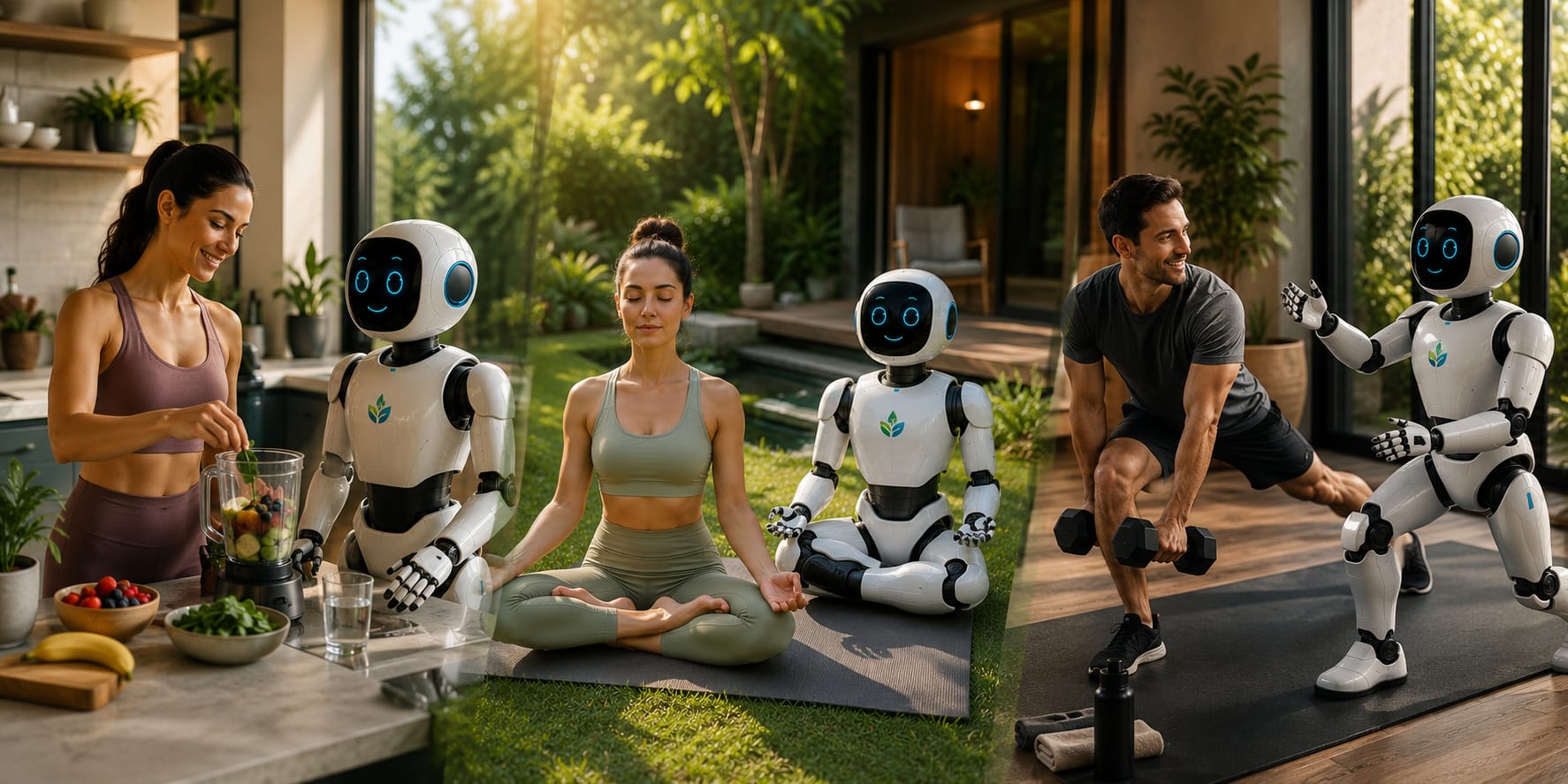
For years, “wellness technology” meant an app, a wristband, or a smart speaker. In 2026, AI humanoid robots are changing that picture. Instead of a notification you can swipe away, a humanoid companion is physically present — it can demonstrate a stretch, walk you through a breathing exercise, and gently remind you to wind down at night. That physical presence turns out to matter for whether healthy habits actually stick.
From screens to presence
The core problem with most wellness tech is follow-through. We download the app, use it for a week, and drift. A humanoid companion changes the dynamic by being embodied and proactive. It greets you, notices your routine, and shows up consistently — the way a coach or a supportive friend would, but without the scheduling friction. The result is less about novelty and more about accountability.
What “embodied wellness” actually looks like
Embodied wellness means a companion that participates in your day rather than just measuring it. In practice, that includes a few core capabilities:
• Guided routines you can follow along with — morning mobility, midday resets, evening wind-downs.
• Reminders that feel like a nudge from someone who cares, not just an alarm.
• Check-ins that ask how you’re doing and adapt to your answers.
• Encouragement that reinforces progress and keeps motivation up.
Why 2026 is a turning point
Two things converged. First, hardware costs fell dramatically — capable humanoid robots that once cost six figures are now available at consumer-adjacent prices. Second, large language models made conversation natural enough that a robot can hold a genuine, context-aware exchange. Together, they moved humanoids out of research labs and into homes.
What a humanoid is — and isn’t
It’s important to be clear: a wellness humanoid is a companion and a coach, not a clinician. It supports healthy habits, but it doesn’t diagnose conditions or replace medical care. Used with that expectation, it fills a real gap — the space between appointments, where most of our health is actually decided by daily choices.
Getting started
If you’re curious, start with your goal rather than the gadget. Do you want help sleeping, moving more, managing stress, or simply staying connected and on-routine? Match the companion to the goal, and let consistency do the rest. That’s the real promise of embodied wellness: not more data, but more follow-through.
Share:
Companion Robots & Loneliness: What the Research Shows (2026)