
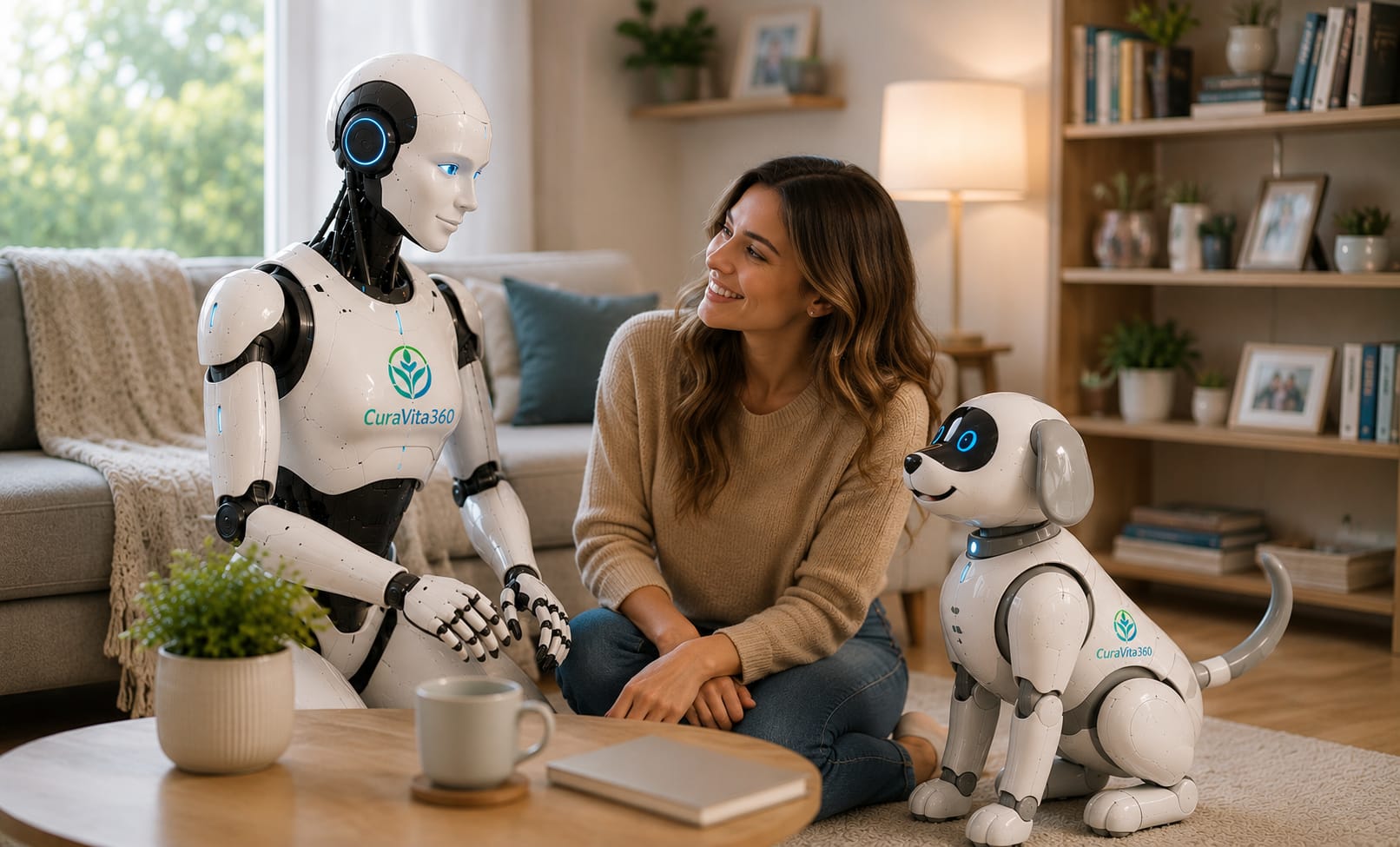
“Companion robot” covers a wide range of devices, from palm-sized robotic pets to full-size walking humanoids. They’re not interchangeable. Choosing well starts with understanding what each type is actually good at.
Companion pet robots
Pet-style robots — think soft, animal-like devices — focus on emotional comfort. They respond to touch and voice, express moods, and provide soothing, low-demand companionship. They’re affordable, unintimidating, and have a strong track record in eldercare for reducing anxiety and loneliness. What they don’t do is walk around, demonstrate exercises, or perform physical tasks.
Humanoid robots
Humanoids stand and move on two legs, gesture, and — in capable models — demonstrate movement and navigate a space. That embodiment unlocks active coaching: leading a stretch, walking you through a routine, and engaging more dynamically. They’re more capable and more present, and generally cost more.
How to choose
Match the device to the primary goal:
• Choose a pet-style robot if the main need is comfort, calm, and simple companionship at the lowest cost.
• Choose a humanoid if you want active wellness coaching, movement demonstration, and a more capable, conversational presence.
• Consider an entry humanoid like a child-sized model if you want true humanoid capability in an approachable, budget-friendly package.
Cost and practicality
Pet robots are the most affordable and the easiest to live with. Humanoids span a wide price range — from approachable entry models to premium home robots — and larger units may ship by freight and need a bit more space. Factor in setup, runtime, and where the robot will live.
The right fit is the one you’ll use
The most capable robot is useless if it sits in a closet. Be honest about your goal, your space, and your comfort with technology. For many people, an approachable humanoid hits the sweet spot: real capability, without overwhelm.
This article is for general wellness information only and is not medical advice. CuraVita360 Robotics products are wellness companions, not medical devices.
Share:
AI Robots & Medication Reminders: Better Adherence at Home
AI Robot Privacy at Home: What to Know & How to Stay Safe