AI robotics in healthcare has moved from speculative to tangible in a remarkably short time. As we look across 2026 and beyond, five trends stand out — and together they sketch a future where robots quietly support health at every stage of life.
1. Costs are falling fast
The single biggest change is price. Capable humanoid robots that recently cost six figures are now appearing at consumer-adjacent prices, with the most affordable bipedal models breaking long-standing price barriers. As costs fall, access widens — from research labs and hospitals to clinics, care facilities, and homes.
2. Conversation is getting genuinely good
LLM integration has made robots far better at natural, context-aware interaction. Expect companions that listen better, remember more, and adapt to individuals — making them more useful for everything from coaching to reducing loneliness.
3. Governments are stepping in
Facing aging populations and care-worker shortages, countries like South Korea and China have moved first — distributing companion robots and opening dedicated smart-care facilities. More nations are expected to develop formal policies and funding for care robotics, accelerating adoption.
4. Care is shifting to the home
The center of gravity is moving from institutions to homes. Consumer home robots are now shipping, and the eldercare robot market is projected to reach several billion dollars by the end of the decade. The vision is support that helps people stay independent where they want to be — at home.
5. Humans and robots, working together
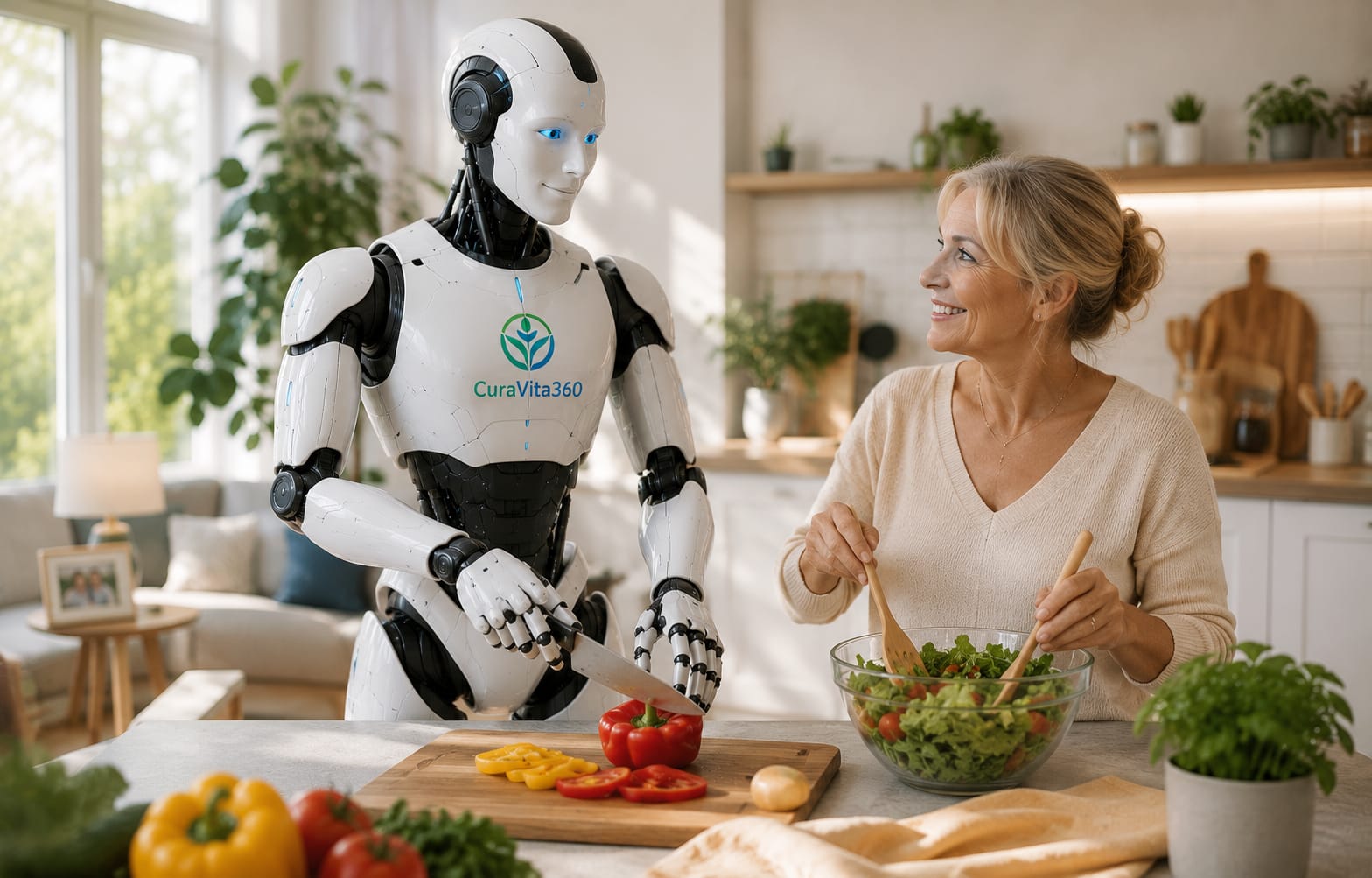
The most realistic and hopeful trend is collaboration. In rehabilitation, robots extend the reach of therapists. In eldercare, companions complement — not replace — family and professional care. The future isn’t robots instead of people; it’s robots that give people more time, reach, and consistency.
What it means for you
For everyday wellness, these trends add up to one thing: capable, affordable, genuinely helpful companions are arriving in ordinary homes. The opportunity is to use them thoughtfully — as supportive tools within a human circle of care — to make healthy living a little more consistent, and a lot less lonely.
This article is for general wellness information only and is not medical advice. CuraVita360 Robotics products are wellness companions, not medical devices.
Share:
LLM-Powered Robots: How AI Conversation Changed Care